
Artificial Intelligence in Pharmacy: Uses and Future Scope
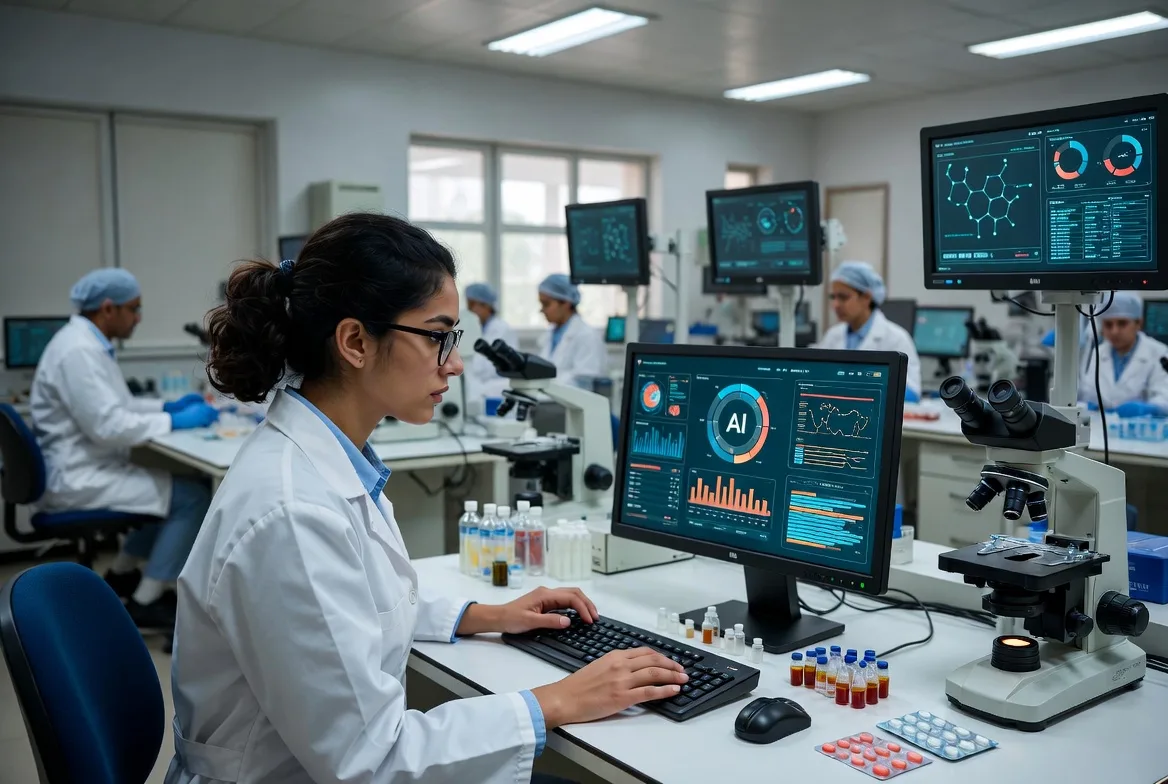
Artificial Intelligence (AI) has moved from theoretical science into everyday healthcare practice. In pharmacy, AI supports research, improves clinical decisions, strengthens patient safety, and enhances operational efficiency. As healthcare systems grow more complex, AI helps professionals analyze vast amounts of data and convert information into meaningful insights. Understanding AI is becoming essential for every student preparing for a future in pharmacy and pharmaceutical sciences.
Understanding AI within pharmacy practice
AI refers to computer systems that can learn, recognize patterns, and make predictions. In pharmacy, AI evaluates prescriptions, clinical histories, laboratory data, and research findings to assist professionals in making informed choices. Rather than replacing pharmacists, AI acts as a partner that improves accuracy, saves time, and supports evidence-based decision-making.
AI and innovation in drug discovery
Drug development traditionally requires years of research, huge financial investment, and high failure rates. AI shortens this journey by screening compounds digitally and predicting how molecules may behave inside the body. AI-driven platforms help identify promising drug candidates, reduce unnecessary experiments, and design better clinical strategies. This leads to safer, faster, and more cost-effective innovation in modern medicine.
Safer prescriptions and clinical decision support
Medication errors can occur during prescribing, dispensing, or administration. AI-powered systems review orders instantly, detect potential interactions, highlight allergy risks, and warn about inappropriate doses. Pharmacists gain real-time support that improves patient safety and strengthens clinical outcomes. AI tools do not replace professional judgment. Instead, they give pharmacists clearer insight before final decisions are made.
Improving patient engagement and treatment adherence
AI plays an active role in patient counseling and follow-up. Mobile applications, chat-based assistants, and reminder systems encourage patients to take medicines correctly, schedule refills on time, and track symptoms. For chronic disease care, AI analyzes wearable device data and health logs, helping healthcare teams recognize trends and adjust therapy earlier.
Inventory, logistics, and pharmacy management
Supply chains in hospitals and retail settings depend on accuracy and timely availability. AI predicts demand patterns, reduces wastage, prevents stockouts, and monitors storage conditions. Better planning ensures essential medicines remain accessible, especially in high-need environments.
Ethics, privacy, and responsible adoption
With technological growth comes responsibility. Data confidentiality, patient consent, algorithm bias, and transparency remain critical issues. Pharmacists must understand how AI systems generate recommendations and must retain final authority in patient care. Ethical training ensures AI remains supportive rather than intrusive.
Preparing students for an AI-driven future
Future pharmacists must combine scientific knowledge with digital confidence. Learning about AI nurtures critical thinking, adaptability, and innovation. Institutions aspiring to be the best pharmacy college in Belagavi and recognized among the best pharmacy colleges in Karnataka emphasize digital tools, research exposure, seminars, and practical learning experiences that help students stay future-ready.
At institutions like Maratha Mandal Pharmacy College, Belagavi, students explore AI applications across drug discovery, pharmacy management, clinical counseling, and public health. Academic guidance, laboratory exposure, and real-world examples help learners understand both opportunity and responsibility.
Shaping Tomorrow’s Pharmacy Professionals
Artificial Intelligence will continue to influence how medicines are discovered, managed, and monitored. Students who develop AI awareness today gain an advantage in understanding future pharmacy practice. With strong academic support, practical learning, and ethical guidance from institutions such as Maratha Mandal Pharmacy College, Belagavi aspiring to be among the best pharmacy colleges in Karnataka, learners become confident contributors to a healthcare system that is smarter, safer, and more responsive to patient needs.